
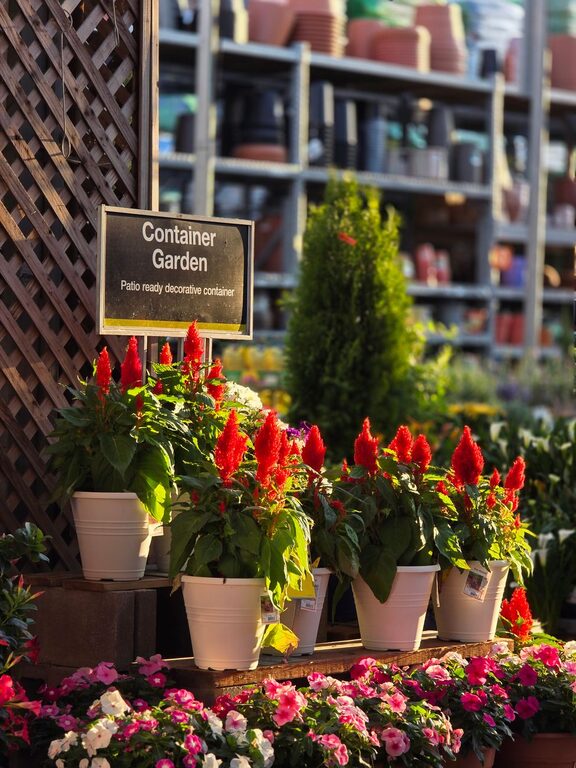
A container flower garden is an easy way to add color to a porch, balcony, patio, or small yard. Unlike a traditional garden bed, containers can be moved, refreshed, and replanted as the seasons change. With a little planning, you can enjoy flowers from early spring through late fall and create attractive displays during the colder months.
The key is to choose plants that suit your growing conditions and replace them as the weather changes. By combining the right containers, soil, flowers, and care routine, you can create a garden that stays interesting throughout the year.
Choose the Right Location
Start by observing the space where you plan to place your containers. The amount of sunlight will help determine which flowers will grow well.
Most flowering plants fall into three light categories:
– Full sun: Six or more hours of direct sunlight each day
– Partial sun: About three to six hours of sunlight
– Shade: Less than three hours of direct sunlight
Also consider wind, rain, and access to water. A sunny balcony may receive strong heat and wind, while a covered porch may protect plants from rain but require more frequent watering.
If possible, place containers near a convenient water source. Regular care is easier when you do not need to carry watering cans across the yard.
Select Containers for Each Season
Almost any container can hold flowers if it has drainage holes. Excess water must be able to escape so plant roots do not remain soggy.
When choosing containers, consider:
– Size: Larger pots hold more soil and dry out more slowly.
– Material: Terra-cotta is attractive and breathable but can dry quickly. Plastic and resin containers are lightweight and retain moisture longer.
– Weight: Heavy pots are more stable in windy locations, while lightweight pots are easier to move.
– Color and shape: Use containers that complement your home and help create a consistent design.
Choose containers that match the mature size of the plants. Small annuals can grow well in modest pots, but shrubs, ornamental grasses, and larger perennials need more room for their roots.
Use Quality Potting Mix
Garden soil is usually too dense for containers. Instead, use a commercial potting mix made for potted plants. These mixes are lighter and allow air and water to move around the roots.
A good potting mix often contains materials such as:
– Peat moss or coconut coir for moisture retention
– Perlite or vermiculite for drainage
– Compost or other organic material for structure
Fill the container nearly to the top, leaving about an inch of space below the rim. This space makes watering easier and helps prevent soil from spilling over the sides.
Plan Your Seasonal Planting
A seasonal container garden works best when you think of each display as a short-term arrangement. Some plants may last for months, while others can be replaced when temperatures change.
Spring Flower Containers
Spring flowers bring fresh color after winter. Cool-season plants can often tolerate chilly nights and light frosts, depending on local conditions.
Good choices include:
– Pansies
– Violas
– Primroses
– Snapdragons
– Sweet alyssum
– Dwarf bulbs such as tulips and daffodils
For a balanced spring container, combine upright snapdragons with trailing sweet alyssum and colorful pansies around the edges. You can also add spring bulbs for early flowers, then replace them with summer plants after they finish blooming.
Spring containers often look best with bright colors such as yellow, pink, purple, and blue. Place them where their colors can be enjoyed from windows or entryways.
Summer Flower Containers
Summer is the main growing season for many container flowers. Choose plants that can handle heat and strong sunlight if your location receives full sun.
Popular summer choices include:
– Geraniums
– Petunias
– Marigolds
– Zinnias
– Verbena
– Calibrachoa
– Angelonia
– Lantana
Use the “thriller, filler, spiller” approach to build a full arrangement:
– Thriller: A tall or eye-catching plant that creates height
– Filler: Rounded or bushy plants that fill the center
– Spiller: A trailing plant that hangs over the container edge
For example, you might combine an upright geranium as the thriller, marigolds as fillers, and calibrachoa as a spiller. Keep plants with similar sunlight and water needs in the same pot.
Fall Flower Containers
As summer flowers fade, refresh your containers with plants that prefer cooler weather. Fall displays can include both flowers and foliage.
Consider planting:
– Chrysanthemums
– Ornamental kale
– Ornamental cabbage
– Pansies
– Violas
– Asters
– Celosia
– Ornamental grasses
Use rich autumn colors such as red, gold, bronze, orange, and deep purple. Add small pumpkins, decorative branches, or pinecones around the plants for seasonal interest. Keep decorations from blocking drainage holes or pressing against plant stems.
Fall containers can often remain attractive for several weeks, especially when spent flowers are removed regularly.
Winter Containers
In areas with mild winters, some plants can provide color during the colder months. In colder climates, winter containers may rely more on evergreen foliage and decorative elements than on flowers.
Try using:
– Dwarf evergreen shrubs
– Small conifers
– Wintergreen plants
– Ornamental grasses
– Branches with colorful stems
– Evergreen boughs
– Decorative berries
Place winter containers in sheltered locations when possible. Freezing temperatures can cause wet soil to expand, which may crack some pots. Use weather-resistant containers and avoid placing delicate pottery directly on cold ground.
Combine Plants Thoughtfully
A successful container arrangement needs more than a mix of attractive flowers. Plants should have similar needs for sunlight, water, and soil.
When planning a combination, consider:
- **Height:** Add taller plants toward the center or back.
- **Texture:** Mix fine leaves with broad leaves for contrast.
- **Color:** Choose two or three main colors instead of using every color at once.
- **Bloom time:** Combine plants that flower at different times for longer interest.
- **Growth habit:** Include upright, rounded, and trailing forms.
Leave enough space between plants for air movement. Crowded containers may need more water and can become difficult to maintain.
Maintain Your Container Garden
Container plants usually need more frequent care than plants in the ground because their roots have limited access to moisture and nutrients.
Follow these basic maintenance steps:
– Check the soil regularly and water when the top inch feels dry.
– Water slowly until excess moisture drains from the bottom.
– Remove faded flowers to encourage continued blooming.
– Trim overgrown or damaged stems.
– Rotate containers occasionally so plants grow evenly.
– Feed flowering plants according to the product instructions.
– Watch for pests and remove affected leaves promptly.
During hot weather, containers may need water every day. During cool or rainy periods, they may need much less. Always check the soil before watering rather than following a fixed schedule.
Refresh Containers Between Seasons
When a seasonal display begins to fade, remove unhealthy plants and clear away old roots and leaves. Healthy plants can sometimes be moved into another container or protected indoors, depending on the variety and local climate.
Refresh the potting mix by loosening it and adding fresh material. If the soil has compacted, replacing part or all of it can improve drainage and plant growth.
Before planting the next display, wash containers with water and a mild household cleaner, then rinse them well. Clean pots help create a fresh start for new plants.
Create a Garden That Fits Your Space
Seasonal container gardening does not require a large collection of pots. A few well-placed containers can make a strong visual impact. Group pots in odd numbers, vary their heights, and repeat colors to create a unified look.
Start with one container for each season, then expand as you learn which plants perform best. With thoughtful plant choices and regular care, your container garden can offer a changing display of flowers, foliage, and texture all year long.